Analysis. Vekuva's measurement of another outlet's report. The reporting is the outlet's; the framing analysis is ours. · Times of India
Vekuva’s reading of Times of India’s report
Scientists studying 170-million-year-old fossils from Morocco spotted tiny black circles under a microscope; scraping revealed needle-thin teeth from a new crocodile relative that likely ate shrimp and small fish
By TOI Science Desk3 min read at Times of India
In brief
Researchers from the University of Portsmouth and Hassan II University of Casablanca have identified a new species of ancient crocodile relative, Ctenosuchus tenuidens, from 170-million-year-old fossils found in Morocco.
The discovery reveals that this Jurassic predator possessed unique needle-like teeth, suggesting it occupied a specialized ecological niche feeding on small aquatic prey like shrimp.
This is an AI-estimated analysis and may not reflect the article's actual intent or the publisher's editorial position.
Read this page in Telugu · Google Translate (opens translate.google.com in a new tab)Machine translation by Google, not checked by Vekuva
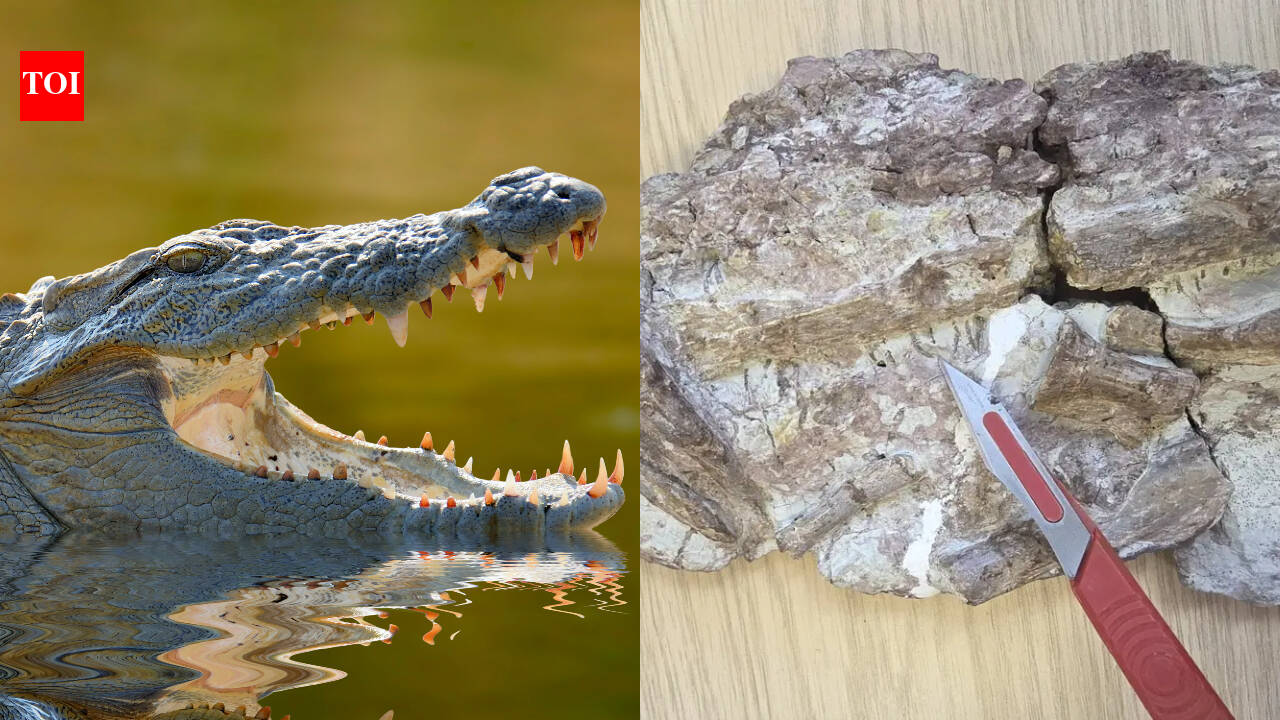
Sometimes a major scientific discovery starts with something barely visible. Researchers studying Moroccan fossils found tiny black circles along a long bone. Under a microscope, these markings revealed an unexpected secret: an array of exceptionally slender teeth belonging to a previously unknown crocodile relative that lived around 170 million years ago. The discovery offers a glimpse into the surprising diversity of prehistoric predators during the Jurassic Period, states a release by the University of Portsmouth.
A closer look reveals a new speciesThe species, named Ctenosuchus tenuidens, was identified by researchers from the University of Portsmouth in the UK and Hassan II University of Casablanca in Morocco. It belonged to the thalattosuchians, a group of ancient reptiles related to crocodiles that occupied marine and freshwater environments during the age of the dinosaurs.
That is the opening of Times of India’s story. The full report is on their site.
Read the full story at Times of India (opens in a new tab)